
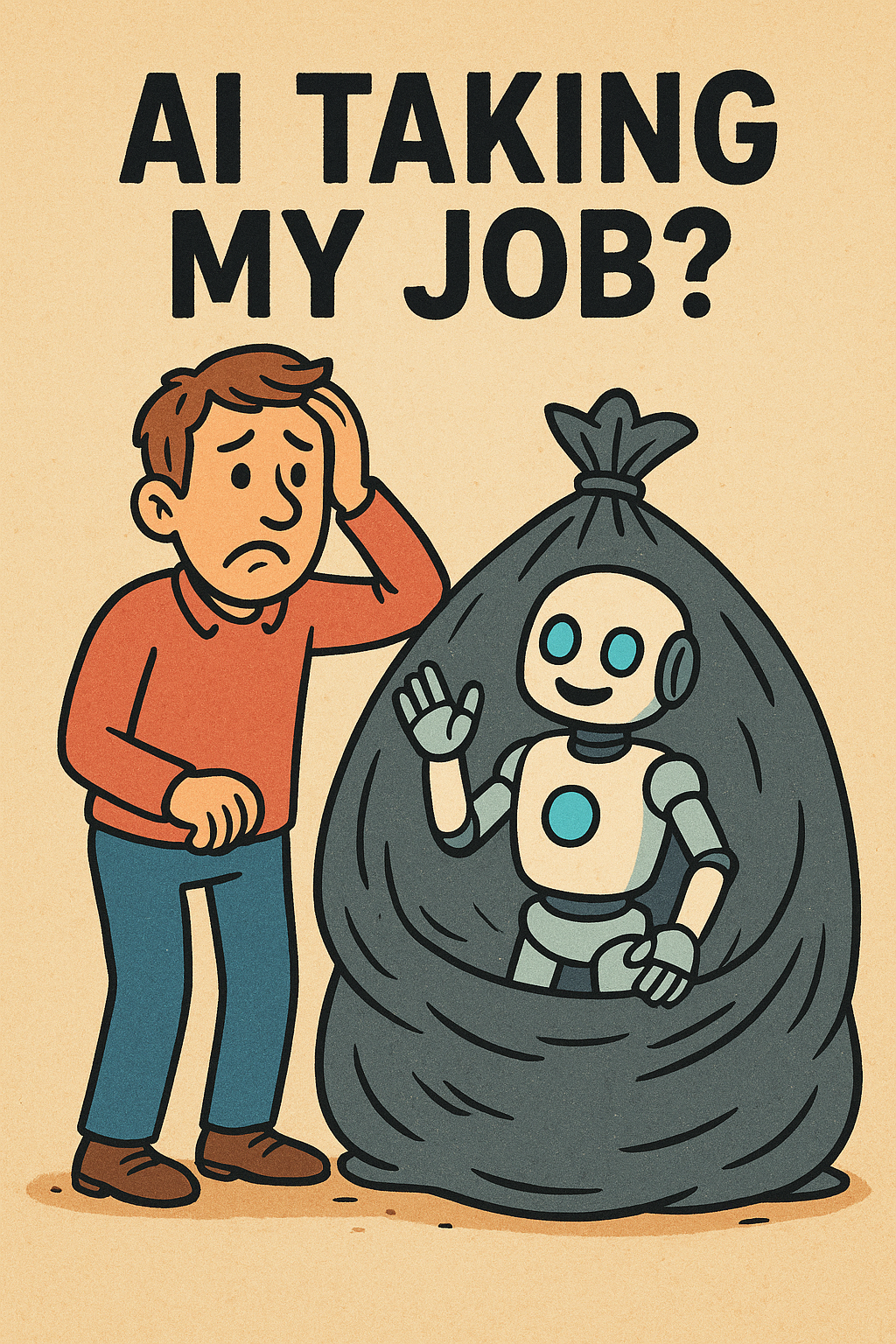
Will AI Take Away My Job ? The Good, Bad and Not So Evil
One of the most common questions in online circles today is; “Will AI take away my job?” It’s a fair concern. Every week, there’s a new product launch or headline about machines outperforming humans in tasks that once required expertise. For anyone working in IT or in any industry touched by technology… that can feel unsettling.
The truth, however, is more complex. AI and automation are not simply job killers. They are changing the nature of work, sometimes in disruptive ways, but also in ways that create opportunities we couldn’t have imagined a decade ago.
The Good: Efficiency and Scale
From an IT perspective, AI and automation have been game changers. System monitoring, log analysis, software testing and many of these once labor intensive tasks can now be automated. Instead of spending hours combing through error logs, teams can rely on AI-driven monitoring systems that detect anomalies in real time.
This not only reduces workload but improves accuracy and speed. IT departments can shift focus from maintenance to strategy, from firefighting to innovation. The same trend applies across industries. In healthcare, AI supports diagnostics, finace Industry, compliance checks are being streamlined and lastly, within the retail space, AI personalizes customer experience.
Arguably, with every new wave of automation, new roles emerge. Think of job titles that didn’t exist ten years ago ?! Cloud architect, DevOps engineer, machine learning engineer, AI ethicist. These roles weren’t created despite automation, but because of it.
The Bad: Disruption Is Real
That said, disruption is unavoidable. Jobs based on repetitive, rules-driven processes are most vulnerable. In IT, this includes areas like basic support tickets or routine infrastructure management. Chatbots, self-service portals, and automated deployment pipelines are already reducing the need for large teams in those areas.
Outside of IT, administrative roles and entry level customer service positions are experiencing similar pressure. These changes are real, and for some, they will be painful. Just as the industry once moved away from mainframe operators and tape librarians, it will continue to move away from certain traditional roles.
The Not So Evil: AI Targets Tasks, Not People
The important distinction is that AI replaces tasks, not people. A system can write a piece of code, but it doesn’t understand why that code matters to the business. It can answer a support query, but it can’t calm a frustrated customer the way a human can.
In IT, automation handles the repetitive tasks but still requires engineers to design workflows, validate results, and make judgment calls. The human role shifts from executor to supervisor, from operator to strategist.
This shift also highlights the enduring value of skills that AI cannot replicate such as problem-solving, creativity, ethical reasoning, and the ability to collaborate across teams. These are precisely the skills that rise in importance as machines take over the mechanical parts of the job.
Preparing for the Future
For IT professionals and beyond, the path forward is about adaptation. The demand for technical skills will remain high, but so will the demand for human skills that machines can’t copy. However, How am I safe ? Will AI take away my job ? Well, here are some practical steps to stay relevant in the age of AI:
- Investing in continuous learning by following developments in AI, cloud, and automation.
- Developing domain expertise. Industry knowledge combined with technical skills creates unique value.
- Strengthening soft skills. Leadership, communication, and empathy grow in importance as routine tasks shrink.
- Experimenting with AI tools to understand how they can complement your role.
- Look for growth areas. Cybersecurity, AI governance, sustainability tech, and advanced analytics are expanding rapidly.
Looking Ahead
Will AI and IT take away jobs? Ohh Yes!! Certain jobs. Quite honestly, they will redefine what work looks like. The future will rely less on routine execution and more on strategic thinking, creativity, and human connection.
Technology is not inherently good or bad. It’sa tool, and like every tool, its impact depends on how it’s used. For many professionals or anyone navigating a career in the digital age; the challenge is not to compete with machines but to learn how to work with them.
The not-so-evil truth is this…… AI isn’t replacing people. It’s reshaping work in ways that make human skills more critical than ever.